


Growth marketing for HealthTech & MedTech

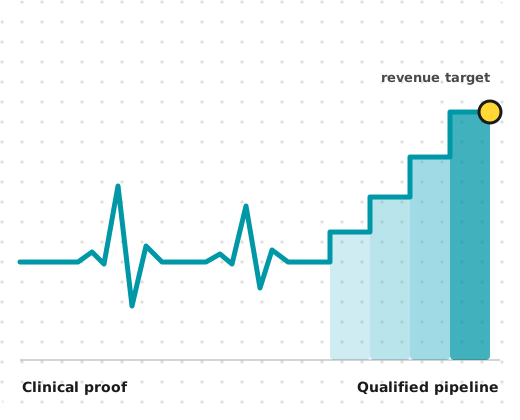
Clinical credibility opens doors.

A go-to-market plan fills the pipeline.

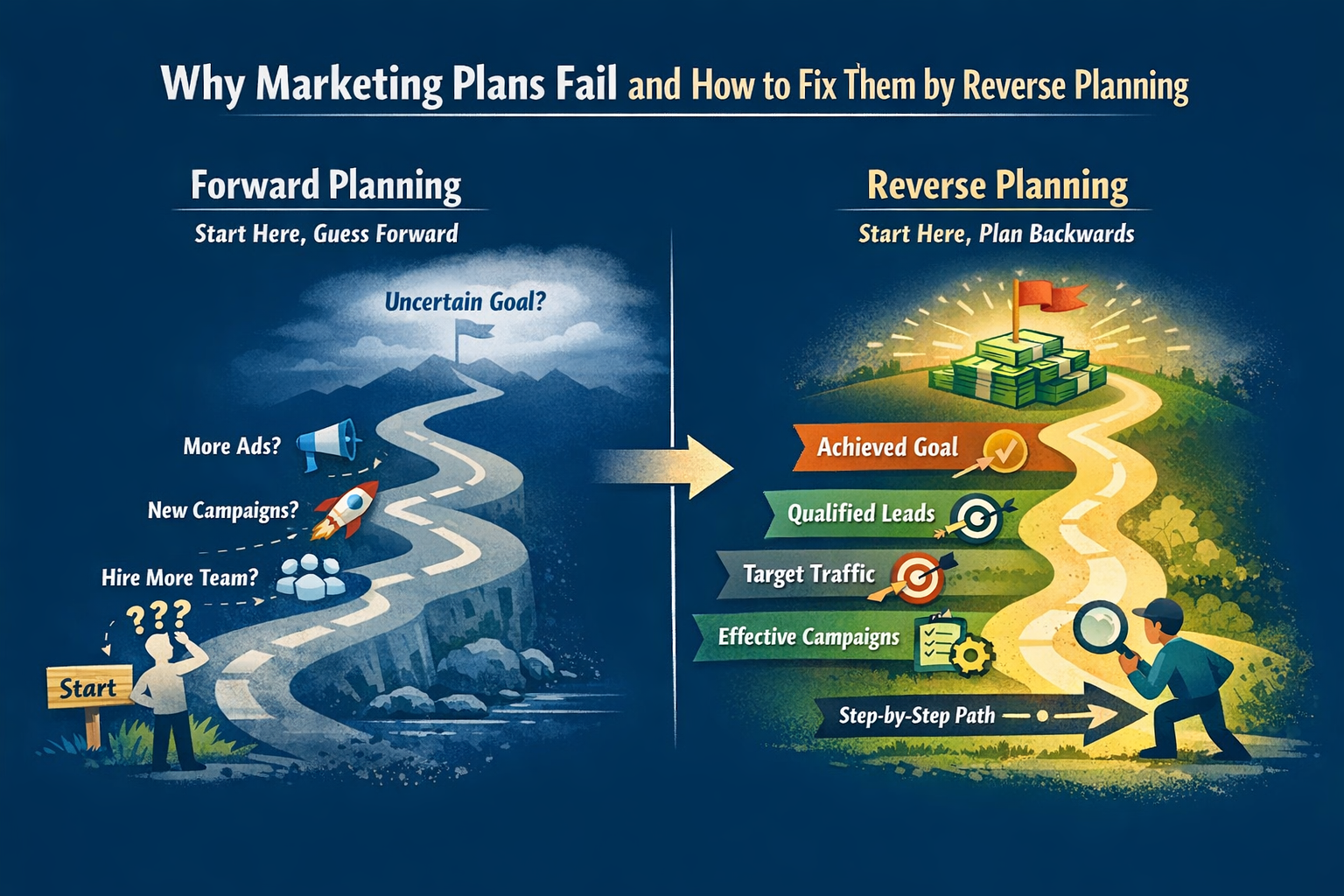
Growth marketing for HealthTech and MedTech founders who have proven the science. Next, clinicians, hospitals, partners and payers need to buy. So we build the plan backwards from your revenue target. Then we run the campaigns, content workflows and AI agents that deliver it.

HealthTech growth marketing: from clinical proof to a qualified pipeline

15+ years

in growth marketing and go-to-market

$87M+

revenue generated for clients and employers

400+

businesses scaled

Brussels & Berlin

based · client portfolio across Europe, the Americas, the Middle East and Southeast Asia

What growth marketing means for a HealthTech company

For a HealthTech or MedTech company, growth marketing turns clinical proof into qualified conversations. These are conversations with the people who sign: department heads, procurement, distributors, insurers or employers. First, it starts from a revenue target. Then it works out how many deals, meetings and contacts that target needs. Finally, it picks the few channels that reach those buyers at a cost you can sustain.

The big difference with general B2B marketing is the buying group. The person who loves your product is rarely the one with the budget. Sales cycles also run long. And every claim has to stay within your evidence and the EU Medical Device Regulation (MDR).

Where HealthTech growth usually stalls

Six patterns that hold HealthTech and MedTech companies back after the first proof of value.

01

Proof that doesn't convert

CE marking, studies and pilots are in place, yet customers still arrive one introduction at a time.

02

Many buyers, one deal

Clinician, department head, procurement and payer each need a different reason to say yes.

03

Congress interest goes cold

A busy booth, a pile of cards, and three months later almost nothing in the pipeline.

04

Founder-led sales hits a ceiling

Growth depends on the founders' network and time. Sales hires arrive before the leads do.

05

Every market has its own rules

INAMI/RIZIV in Belgium works differently from DiGA in Germany. Distributors and habits change too.

06

Investors want traction, not pilots

The next round needs a pipeline you can show, not marketing squeezed between deadlines.

Recognise two or more? Find out which one costs you most.

Get your free evaluation

Who actually buys, and what wins them

Six people, six different questions. A plan gives each of them the proof they need, in the place they look for it.

User

“Does it work in my day?”

Clinician, physio, nurse

What wins them: Hands-on demo, peers already using it

Champion

“Is the evidence strong enough to back?”

Key opinion leader

What wins them: Published data, a stage to present it

Budget owner

“What does it change in outcomes and cost?”

Department head, clinic owner, HR

What wins them: A clear outcome and cost case

Gatekeeper

“Is it safe, compliant and easy to buy?”

Procurement, IT, data protection

What wins them: Security, GDPR and tender-ready documents

Payer

“Who pays, and is it reimbursed?”

INAMI/RIZIV, insurer, mutuality, employer

What wins them: Reimbursement or cost-saving evidence

Beneficiary

“Will I use it and feel the difference?”

Patient, employee, athlete

What wins them: Simple onboarding, visible results

What changes when the plan starts from revenue

Six steps, side by side: how it usually runs, how it runs with a revenue-first plan, and what automation takes off your team's plate.

Step

Typical today

Revenue-first plan

Automation helps

Set the target

Typical today

Activity goals: posts, events

Revenue-first plan

Deals and meetings needed per quarter

Automation helps

Live funnel model

Map the buyers

Typical today

One message for everyone

Revenue-first plan

A message per buying role

Automation helps

Agents build role-matched lists

Choose channels

Typical today

A bit of everything

Revenue-first plan

2–3 channels, ranked by cost per meeting

Automation helps

Cost-per-meeting dashboards

Build content

Typical today

When someone finds time

Revenue-first plan

One study becomes webinar, posts, emails

Automation helps

Agents draft, medical lead approves

Run campaigns

Typical today

One channel at a time, when there's time

Revenue-first plan

Congresses, outreach, LinkedIn and email in one sequence

Automation helps

Follow-ups and CRM logging, automatic

Review & optimise

Typical today

Budgets repeat last year

Revenue-first plan

Monthly review, budget follows pipeline

Automation helps

Reports built automatically

Revenue backwards: a worked example

Illustrative MedTech company · €320K new-revenue target · 80% clinics at €6K, 20% hospitals at €33K

Target

€320K

in 12 months

÷ €11.4K average deal

28 deals

22 clinics, 6 hospitals

÷ 32% win rate

88

opportunities

÷ 45% meeting to opportunity

196

meetings · ≈16 a month

16 meetings a month sets the channel plan. Hospitals close slower, so they enter the pipeline first.

Run it on your numbers

What we optimise for

Revenue numbers, not likes or traffic.

Qualified pipeline value

per quarter, by buyer type

Cost per qualified meeting

with a decision-maker

Sales cycle length

first meeting to signature

Event-to-pipeline rate

for every congress

Time to first customer

in each new market

Channel payback

what each euro returns, and when

Channels that tend to fit

Usually earn their place

Congresses with a before and after plan

Clinician and KOL advocacy

Distributor and partner enablement

Outreach to named accounts

Webinars and CPD content

Email nurture across long cycles

Often waste budget early

Broad paid social

Bought lists

Translating before one market works

Retainers paid for output

How we can work together

Built for HealthTech and MedTech teams past the first proof of value: CE-marked or with first paying customers, 2 to 100 people, and no senior marketing lead yet.

Step 1 · Start here

Growth Clarity™

Your 12-month go-to-market plan, built backwards from the revenue target.

  • Buying-group and message map
  • Channel plan with funnel numbers
  • First 90 days, week by week

Fixed price · delivered in 7 to 10 days

See what's included

Step 2 · If it fits

Fractional growth lead

Embedded 2 to 3 days a week, running the plan with automation and AI agents.

  • Weeks 1–2: plan, funnel, CRM and tracking
  • Weeks 3–6: first two channels live
  • Weeks 7–12: first review, budget follows meetings

Brussels-based · on site or remote

Ask about availability
Roberta D'Angelo, founder of FlyitOnline

Roberta D'Angelo

Founder, FlyitOnline · Growth strategist

Brussels & Berlin · LinkedIn

I've spent 15+ years in growth marketing and go-to-market, both in-house and as a consultant. In that time, I've generated more than $87M in revenue for the companies I've worked with. I've led North American and European expansion for sales-led technology companies, and I've lived and worked in seven countries.

The experience that carries straight into HealthTech:

  • Long sales cycles with several decision-makers and procurement
  • Technical products that need explaining before anyone buys
  • Partner and event-led growth, including flagship events with partners
  • Market entry across Europe and North America
  • Automation at scale: 40+ live workflows and AI agent systems for content, CRM and reporting

Prevention, brain health and human performance are fields I follow closely. That's why I chose to work with companies building them. My method, Growth Clarity™, plans marketing backwards from the revenue target, for every client.

Questions HealthTech founders ask

Straight answers about HealthTech growth marketing, before you book anything.

Do I need a HealthTech specialist or a growth marketer?

Early on, the harder problem is usually commercial. Which buyers should you target? Which channels reach them? And how many meetings does the revenue goal need? Clinical depth sits with your team, while a growth marketer brings the system that turns it into pipeline.

How do you handle regulated claims under MDR?

Every message starts from the evidence you already have. Then your regulatory or medical lead approves it before anything goes out. Where claims are restricted, we use education, case examples and third-party voices instead.

When is the right time to bring in marketing?

Once you have early customers or pilots, a defined offer and a revenue target for the next 12 months. Before that, founder-led selling usually teaches you more.

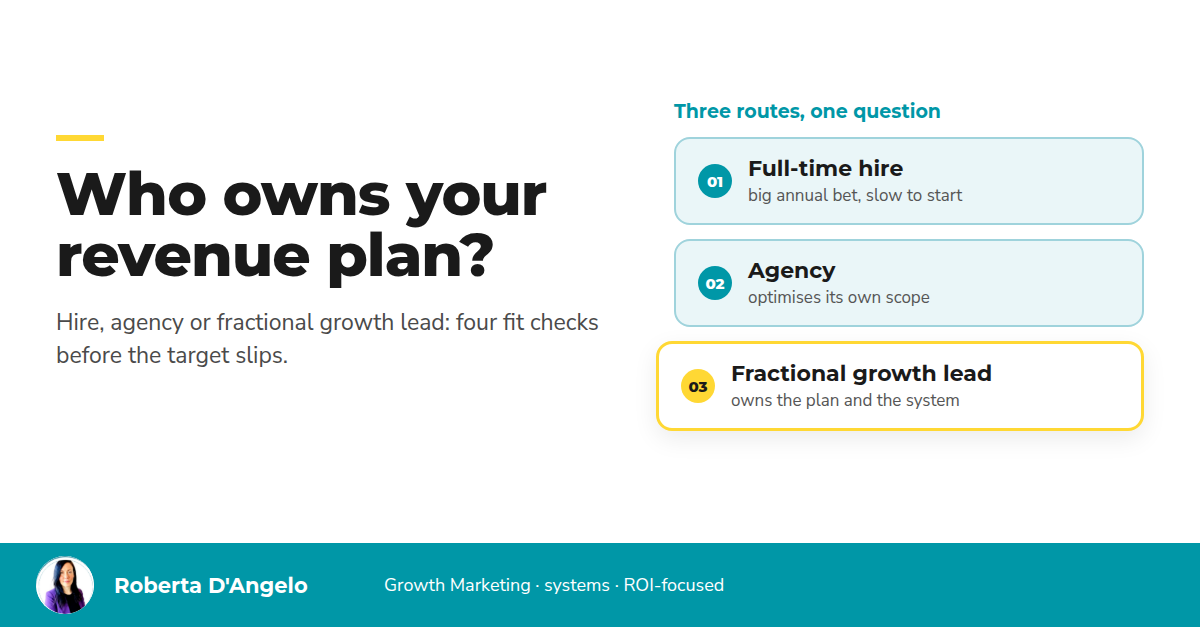
Why fractional rather than a full-time hire?

A senior full-time hire means a full salary, months of recruiting and a long ramp-up. In contrast, fractional brings senior judgement from the first week. You get 2 to 3 days a week, and you can scale up or down.

What do automation and AI agents actually do?

They take the repetitive work: researching accounts, drafting content, logging contacts, sending follow-ups and building reports. However, strategy, messaging and every approval stay with people. As a result, a small team gets the output of a bigger one.

Do you work with our existing tools?

Yes. I work with the CRM, email and analytics tools you already use. I only suggest changes when a gap is costing you deals.

Still have a question?

Ask Roberta