


Growth marketing for industrial equipment & manufacturing

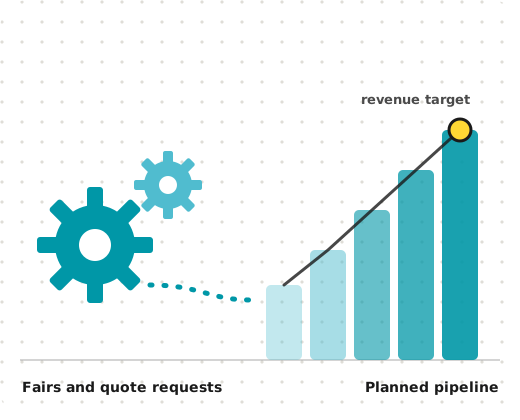
Turn trade-fair contacts and quote requests into a pipeline you can plan.

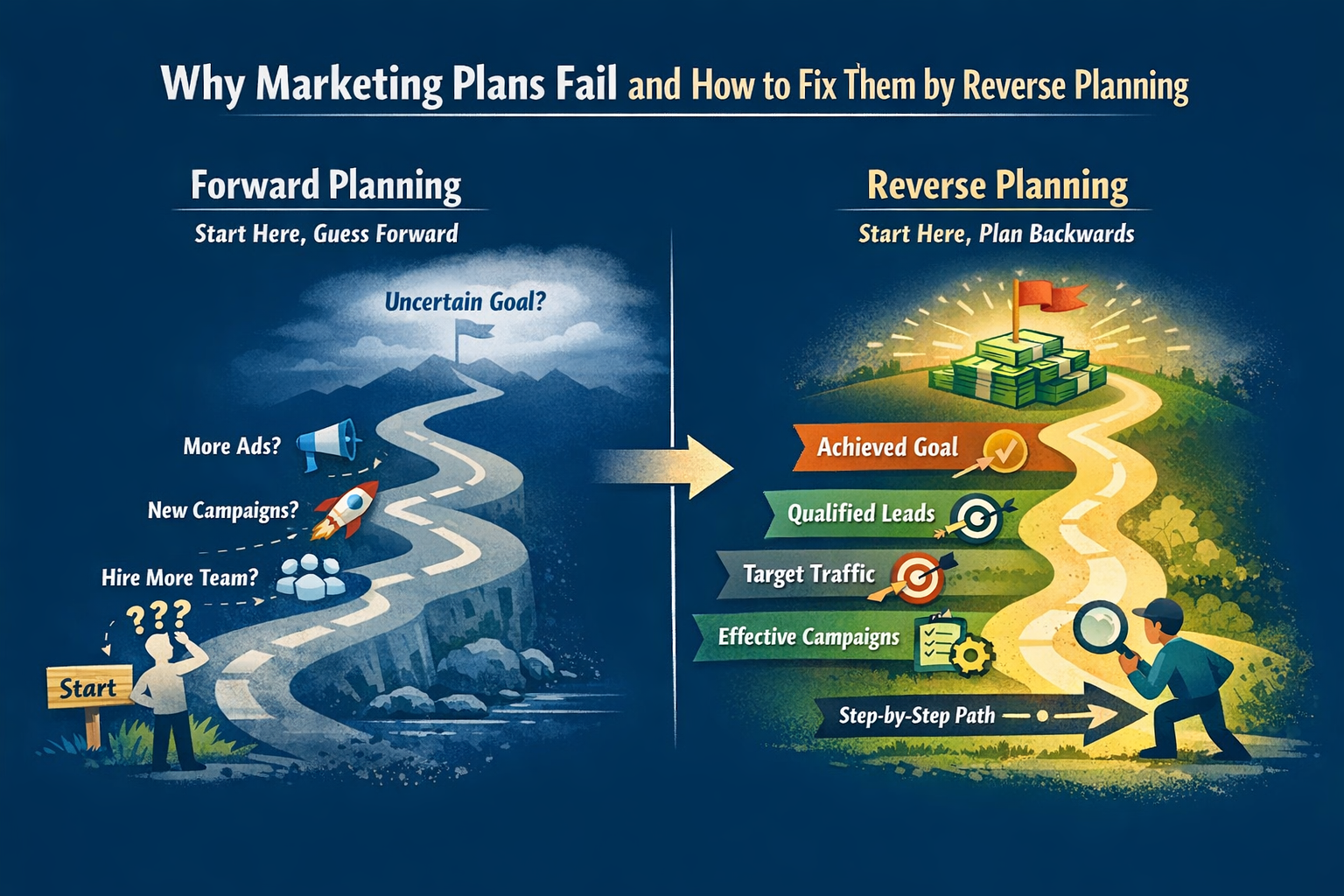
Manufacturing growth marketing for companies that make equipment, components and systems, and sell them to businesses directly or through distributors. Sales cycles are technical, and engineers decide alongside procurement. We build the plan backwards from your revenue target, then run the campaigns, content workflows and AI agents that deliver it.

Manufacturing growth marketing: from trade-fair contacts and quote requests into a pipeline you can plan

15+ years

in growth marketing and go-to-market

$87M+

revenue generated for clients and employers

400+

businesses scaled

Brussels & Berlin

based · client portfolio across Europe, the Americas, the Middle East and Southeast Asia

What manufacturing growth marketing means

Manufacturing growth marketing turns your product data, references and trade-fair presence into qualified conversations with the people who specify and buy. It starts from a revenue target. Next, it works out how many orders, quotes and meetings that target needs. Then it picks the few channels that reach engineers, buyers and partners at a cost you can sustain.

What sets it apart is the mix of routes to market. Some customers buy directly. Others order through distributors or integrators. Big events, such as Hannover Messe, still shape the year. Your marketing has to serve every route, and connect what happens at the stand to what happens in the CRM.

Where manufacturing growth usually stalls

Six patterns that hold equipment and component makers back once the product is proven.

01

Trade fairs without follow-up

Hundreds of badge scans. A few weeks later, nobody remembers who to call.

02

Quotes that go quiet

The request came in, the quote went out, and then nothing.

03

Different buyers, same message

Engineers, procurement and plant managers buy for different reasons, but get the same brochure.

04

Distributors who sell someone else first

Partners carry your range, but push the product that's easiest to sell.

05

Every country is its own market

Belgium, Germany and France each have their own standards, languages and buying habits.

06

Sales hires before pipeline

A senior seller joins, and there isn't enough to work on.

Recognise two or more? Find out which one costs you most.

Get your free evaluation

Who actually buys, and what wins them

Five people, five different questions. A plan gives each of them the proof they need, in the place they look for it.

User

“Will it run reliably on our line?”

Production or maintenance manager

What wins them: References from a comparable site

Specifier

“Does it meet our specs and standards?”

Design or process engineer

What wins them: Datasheets, CAD files and test results

Budget owner

“What's the total cost, and the payback?”

Plant director, CFO or owner

What wins them: A total-cost and payback case

Gatekeeper

“Is the supplier certified and reliable?”

Procurement, quality, HSE

What wins them: Certifications, lead times and service terms

Distributor

“Can we sell and support it easily?”

Distributor or system integrator

What wins them: Margins, training and ready-made sales material

What changes when the plan starts from revenue

Six steps, side by side: how it usually runs, how it runs with a revenue-first plan, and what automation takes off your team's plate.

Step

Typical today

Revenue-first plan

Automation helps

Set the target

Typical today

Last year plus a percentage

Revenue-first plan

Orders needed per segment and channel

Automation helps

Live funnel model

Map the buyers

Typical today

One catalogue for everyone

Revenue-first plan

Separate playbooks for direct and distributor sales

Automation helps

Agents build account lists per segment

Time the market

Typical today

Trade fairs set the calendar

Revenue-first plan

Investment cycles and project timelines per account

Automation helps

Tender and expansion alerts

Build content

Typical today

Datasheets and a product catalogue

Revenue-first plan

References become case studies and cost calculators

Automation helps

Agents draft, you approve

Run campaigns

Typical today

One channel at a time, when there's time

Revenue-first plan

Outreach, LinkedIn, email and events in one sequence

Automation helps

Follow-ups and CRM logging, automatic

Review & optimise

Typical today

Budgets repeat last year

Revenue-first plan

Monthly review, budget follows pipeline

Automation helps

Reports built automatically

Revenue backwards: a worked example

Illustrative equipment maker · €910K new-revenue target · 60% direct accounts at €42K, 40% through distributors at €18K

Target

€910K

in 12 months

÷ €32.4K average order

28 orders

17 direct, 11 via distributors

÷ 30% quote win rate

93

quotes

÷ 45% meeting to quote

207

meetings · ≈17 a month

17 meetings a month sets the channel plan. Larger projects follow investment cycles, so they need to start 6 to 12 months ahead.

Run it on your numbers

What we optimise for

Revenue numbers, not likes or traffic.

Quote-to-order rate

by segment and channel

Cost per qualified meeting

with a decision-maker

Sales cycle length

direct vs distributor

Distributor pipeline

deals each partner brings in

Revenue per account

first order and repeat business

Channel payback

what each euro returns, and when

Channels that tend to fit

Usually earn their place

Trade fairs with a follow-up plan

Outreach to named accounts

Case studies with real site results

Distributors and integrators as partners

Technical content for engineers

Founder-led LinkedIn

Often waste budget early

Broad brand campaigns

Fairs without a lead process

Translating before one market works

Retainers paid for output

How we can work together

Built for equipment, component and industrial technology makers with proven products and first customers, 2 to 100 people, and no senior marketing lead yet.

Step 1 · Start here

Growth Clarity™

Your 12-month go-to-market plan, built backwards from the revenue target.

  • Playbooks for direct and distributor sales
  • Channel plan with funnel numbers
  • First 90 days, week by week

Fixed price · delivered in 7 to 10 days

See what's included

Step 2 · If it fits

Fractional growth lead

Embedded 2 to 3 days a week, running the plan with automation and AI agents.

  • Weeks 1–2: plan, funnel, CRM and tracking
  • Weeks 3–6: first two channels live
  • Weeks 7–12: first review, budget follows meetings

Brussels-based · on site or remote

Ask about availability
Roberta D'Angelo, founder of FlyitOnline

Roberta D'Angelo

Founder, FlyitOnline · Growth strategist

Brussels & Berlin · LinkedIn

I've spent 15+ years in growth marketing and go-to-market, both in-house and as a consultant. In that time, I've generated more than $87M in revenue for the companies I've worked with. I've led North American and European expansion for sales-led technology companies, and I've lived and worked in seven countries.

The experience that carries straight into manufacturing:

  • Long, technical sales cycles with engineering and buying committees
  • Partner-led growth with distributors, resellers and integrators
  • Event-led pipelines where the follow-up matters more than the stand
  • Market entry across Europe and North America
  • Automation at scale: 40+ live workflows and AI agent systems for content, CRM and reporting

I don't bring decades on the factory floor. I bring the go-to-market system that technical B2B sales needs, and I build it with your engineers and sales team. My method, Growth Clarity™, plans marketing backwards from the revenue target. I use it with every client.

Manufacturing growth marketing: questions founders ask

Straight answers on manufacturing growth marketing, before you book anything.

Should we sell direct or through distributors?

Usually both. The funnel numbers decide the mix. Direct sales win the large, technical accounts, while distributors cover regions and smaller orders you can't reach alone.

How do we get more from trade fairs?

Plan the follow-up before the fair. Book meetings ahead, qualify contacts at the stand, and start the sequence within a week. Then measure fairs on pipeline, not badge scans.

How do we follow up on quotes that go quiet?

Agree the next step and the decision-maker when you send the quote. Then follow up with proof that answers each buyer's question: specs for engineers, payback for finance.

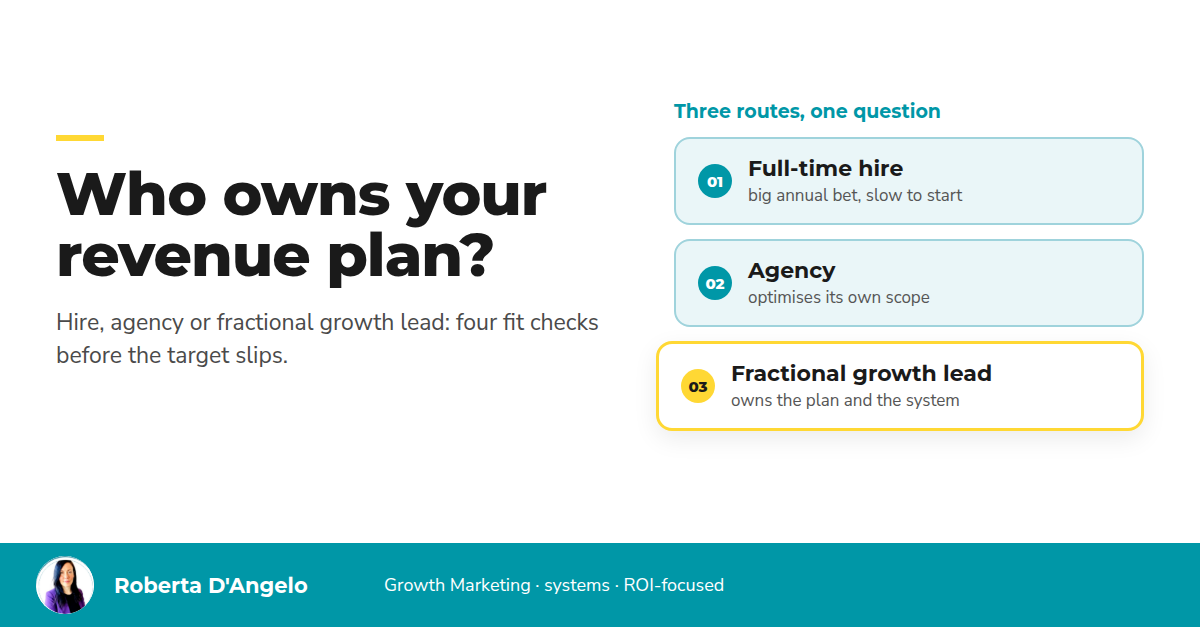
Why fractional rather than a full-time hire?

A senior full-time hire means a full salary, months of recruiting and a long ramp-up. By contrast, fractional brings senior judgement from the first week at 2 to 3 days a week. You can also scale it up or down.

What do automation and AI agents actually do?

They take the repetitive work: researching accounts, tracking tenders and expansion news, drafting content, logging contacts, sending follow-ups and building reports. Strategy, messaging and every approval stay with people.

Do you work with our existing tools?

Yes. I work with the CRM, ERP exports and email tools you already use. I only suggest changes when a gap is costing you orders.

Still have a question?

Ask Roberta